




In Greece, Turkey, Portugal, Bulgaria, North Macedonia, Montenegro, Ukraine, and on many Spanish islands, used toilet paper goes in the bin next to the toilet, not into the bowl. The paper itself is rarely the problem: the pipes are narrower (sometimes 70 mm instead of 100 mm), the slope is too steep, and some houses are connected to a cesspit. You'll recognize the setup by the closed bin next to the bowl. If you clean with water while traveling, you'll produce less paper in the first place.
You're sitting on a Greek island, everything's fine, and then you spot it: the little bucket with a lid next to the toilet. Beside it, a laminated sign in four languages. Please, no paper in the toilet.
For many travelers, this is the strangest moment of the vacation. But it's not an exception — it's daily life for millions of households.
The best-known example is Greece, including Crete and most of the islands. Also mentioned are Turkey, Portugal, Bulgaria, North Macedonia, Montenegro, Ukraine, and rural areas and islands in Spain.
Important: this isn't a national rule, it's a house-by-house question. In a new building in Athens, you flush as usual; in the guesthouse three streets over, you don't. What matters is what's posted in the bathroom.
It's rarely about the paper. It's about the pipes.
Sewer pipes there are sometimes considerably narrower than ours. The Hellas Blog cites a diameter of 70 millimeters, compared to the 100 millimeters required in Germany. Then there's the slope: if it's too steep, the water drains faster than the paper does. The paper stays behind, dries out, and over time turns into a clog.
And then there are houses not even connected to a sewer system, but to a septic pit. That clogs just as easily.
Three clues, in this order:
The bucket. If there's a closed container right next to the bowl, that's your answer. Nobody puts it there for decoration.
The sign. Usually above the flush, usually multilingual, often handwritten.
The setting. Old buildings, small islands, four-room guesthouses: more likely a bucket. New hotel building: less likely.
When in doubt, use the bucket. Getting it wrong in that direction costs you nothing.
Once, it's usually fine. A week with six people in a vacation rental — often not so fine.
The result isn't a disaster, just a clogged pipe, a repair guy, and a conversation nobody wants to have on vacation. On small islands, there's also the fact that wastewater is sometimes pumped out and hauled away. That's the real reason for the strictness: it's expensive.
The discussion always circles around disposal. Rarely around why so much paper piles up in the first place.
In Turkey, the water hookup at the toilet, called taharet, has long been standard bathroom equipment. Same in Japan, South Korea, and much of South Asia. There, paper isn't the cleaning method — at most, it's the towel afterward.
Put differently: the sign next to the toilet isn't a sign of backwardness. It's a hint that in this part of the world, someone found a different solution than wood pulp.
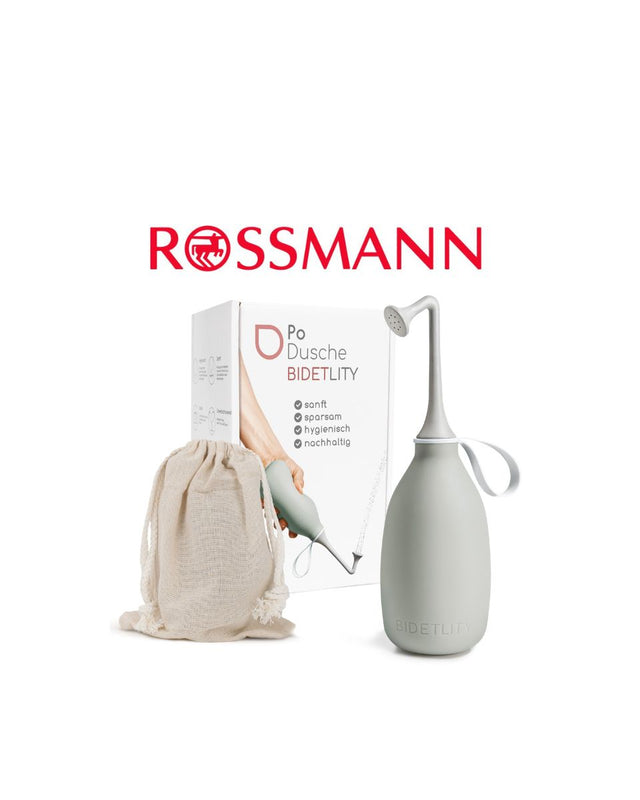
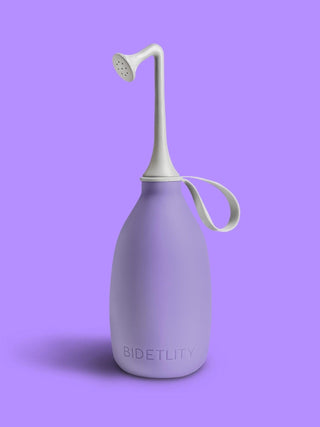
No plumbing required. A bottle with a nozzle, 450 milliliters, pressure from the palm of your hand. Fill it, use it, pat dry. Whatever paper you still need fits easily in any bucket.
Anyone who's tried it once while traveling usually ends up asking the question from the other side: not where to put the paper, but why there was ever so much of it to begin with.
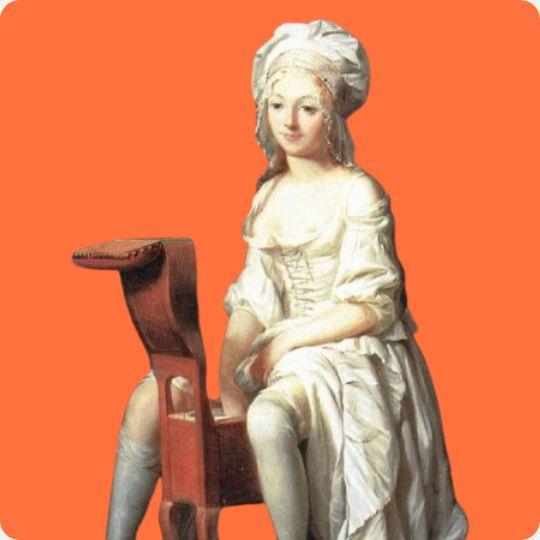
"Bidet" means "little horse" in French, because people used to sit on it the way you'd sit in a saddle. From 17th-century luxury furniture to Italy...
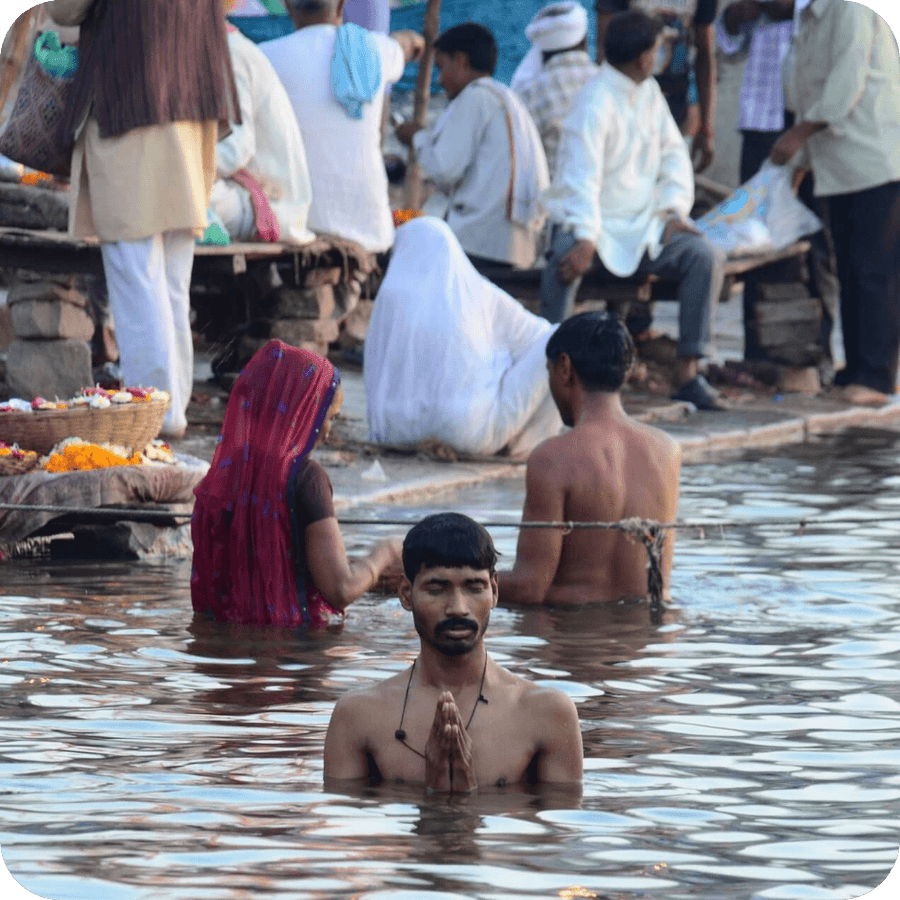
Cleansing rituals with water exist in many religions: bathing in the holy Ganges in Hinduism, the Jewish immersion bath known as the mikveh, Christ...
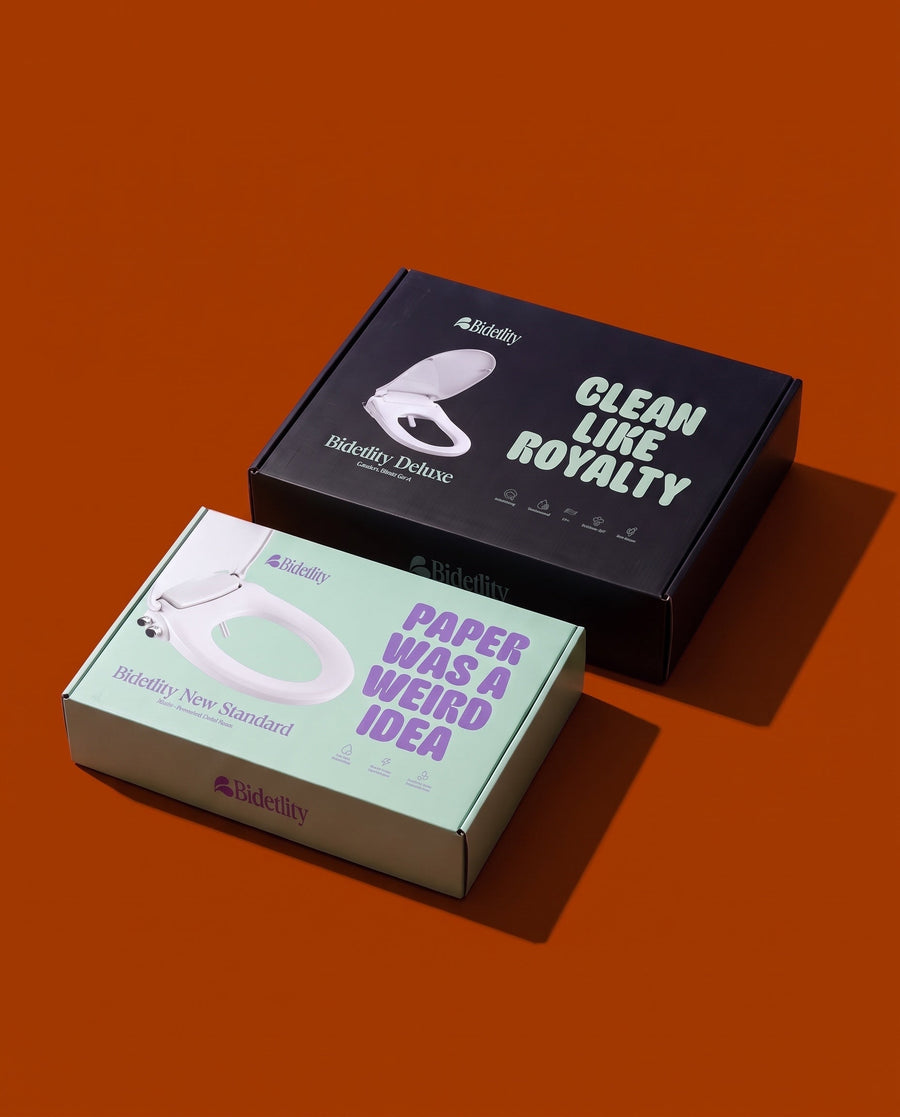
The Bidetlity New Standard is a non-electric bidet attachment for €99: infinitely adjustable water pressure, two nozzles, installed in about 20 min...

Discover our products and do the best business of your life.
One word usually does it. Or just tap something below.
Popular Quick answersOne word usually does it. Or just tap something below.
Popular Quick answers