







Straining isn't a neutral act. It raises the pressure exactly where relaxation is needed instead. It works in the short term, but over time it throws the whole process off.
Many of us learned that a bowel movement is something you get done. If it doesn't happen right away, we give it a push. Time pressure, noises, unfamiliar toilets – all of it makes straining seem normal. Nobody questions it, because it works. Or at least it seems to.
The gut is built for cooperation, not for force.
When you strain, pressure rises in the abdomen while the pelvic floor muscles often don't relax enough. That can disrupt the natural emptying instead of supporting it.
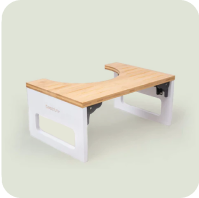
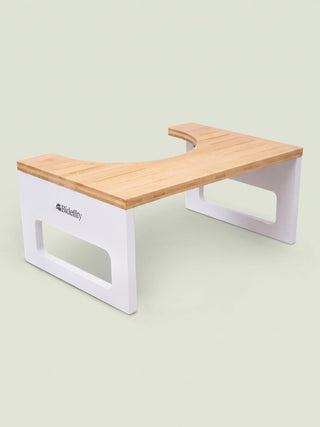
Then there's your posture. On conventional toilets we often sit too upright, which kinks the last section of the bowel at an awkward angle. Raising your feet slightly, for example with a toilet stool, changes that angle. It often reduces the urge to strain, because the body can “let go” more easily.
“I just can't go without straining.”
Often a sign of an unfavorable process, not a broken gut.
“A little pressure is normal, though.”
A gentle urge, yes. Actively straining, not really.
“It only does harm if you overdo it.”
Even regular light straining can add up.
“It's all just habit.”
Partly. But posture and mechanics genuinely play a role.
Straining isn't a character flaw and it isn't a taboo.
It's a signal that something in the process doesn't fit together – often fixable without forcing anything.
Less pressure, more support. More time, a different posture, calmer routines. Sometimes it's enough to let the body do its work better – instead of pushing it along.

From butt shower to toilet stool – discover our versatile range for the New Normal in your bathroom. No taboos, just a whole lot of comfort.
One word usually does it. Or just tap something below.
Popular Quick answersOne word usually does it. Or just tap something below.
Popular Quick answers